Chapter 8 · Vehicle knowledge and handling · 4 min
Winter and tyres
Winter places great demands on a lorry driver. A heavy vehicle that starts to slide is hard to bring back under control, and a vehicle combination can jackknife if the trailer loses grip. That is why the rules on winter tyres are stricter for heavy vehicles than for cars.
Winter tyre period
Heavy lorries, heavy buses and trailers towed by them must have winter tyres (vinterdäck) or equivalent equipment during the period 10 November–10 April (Traffic Ordinance (trafikförordningen) 4 kap. 18 b §).
The requirement applies regardless of road conditions. So it makes no difference if the road is dry and the temperature is above zero on 20 November. The lorry must still have winter tyres.
For cars, light lorries and light buses the rule is different. They need winter tyres during the period 1 December–31 March, but only when there are winter road conditions (vinterväglag) (4 kap. 18 a §). Do not mix up the two rules.
A heavy lorry used in construction work or similar can be exempt from the requirement.
Tread depth
During the period 10 November–10 April all tyres on a heavy lorry must have a tread depth (mönsterdjup) of at least 5 millimetres. The tyres on a trailer towed by such a lorry must have at least 1.6 millimetres.
A deeper tread clears slush and water better and gives more grip. Check the tread depth at several places on the tyre, as wear can be uneven.
Marking of winter tyres
Winter tyres on driving axles and front axles must be marked with the alpine peak with snowflake (alptopp med snöflinga) symbol, be marked POR (Professional Off Road) or be studded.
On axles other than driving and front axles, on vehicles and trailers with a gross vehicle weight over 3,500 kg, tyres marked M+S (or an equivalent marking such as M.S, M&S or Mud and Snow) are sufficient.
Studded tyres
Studded tyres (dubbdäck) may be used during the period 1 October–15 April. They may also be used before and after that period if there are, or can be expected to be, winter road conditions.
On heavy lorries and buses you may not mix studded and non-studded tyres on the same axle. This requirement also applies to trailers towed by heavy vehicles.
The driving axle and the trailer
A heavy lorry with two axles, one of which is a driving axle, that tows a trailer must meet one of two requirements during 10 November–10 April (4 kap. 18 e §):
- at least 25 per cent of the vehicle combination's total gross weight must be on the driving axle, or
- the trailers' combined gross weight may not be more than 1.5 times the lorry's gross weight.
Otherwise an empty lorry towing a fully loaded trailer gets too little weight on the driving axle. It can then lose grip on an uphill slope or have difficulty braking and steering.
Drive safely in winter road conditions
The tyre rules are the foundation. How you drive is just as important.
Adjust your speed. You must always adjust your speed to the road conditions and visibility, even if the sign allows more. The braking distance on ice can be several times longer than on dry tarmac.

Keep a longer distance. Give yourself time to brake gently. Hard braking on a slippery road can make the trailer swing out.
Be careful with the engine brake and retarder. On a very slippery road a powerful engine brake or retarder can lock the driving wheels. Many vehicles have systems that reduce the risk, but stay alert.
Think about bridges and shady stretches. They can be slippery even when the rest of the road is dry.
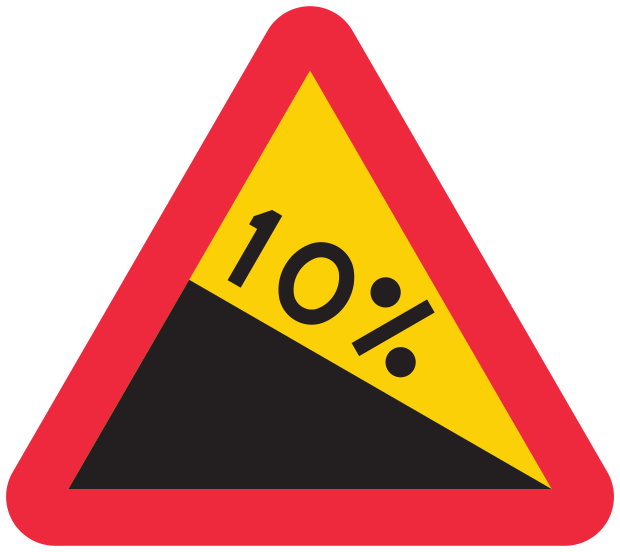
Plan for hills. Build up momentum in good time before an uphill slope and avoid stopping on the hill. On a steep downhill slope you should be in a low gear at low speed before the slope begins.
See and be seen. Clean the headlights, lamps, reflectors and number plate. Snow and dirt on the rear lights mean that others cannot see you.
Check before driving
Do an extra thorough check in winter:
- Check the tread depth and look for damage on all tyres, including on the trailer.
- Check that the tyres have the correct pressure.
- Scrape and brush the whole vehicle, including the roof. Snow and ice from the roof can come loose while driving and hit vehicles behind.
- Check that the brakes work and that there is no ice in the air system.
Remember
- Heavy lorries, buses and their trailers must have winter tyres 10 November–10 April, regardless of road conditions.
- The tread depth must be at least 5 mm on the lorry and at least 1.6 mm on the trailer.
- Driving and front axles must have alpine peak/snowflake, POR marking or studs. Other axles on heavy vehicles may have M+S.
- Studded tyres are allowed 1 October–15 April, and studded and non-studded tyres may not be mixed on the same axle.
- In winter at least 25% of the combination's weight must be on the driving axle, or the trailers may weigh no more than 1.5 times the lorry.
- Adjust your speed and keep a longer distance on slippery roads.